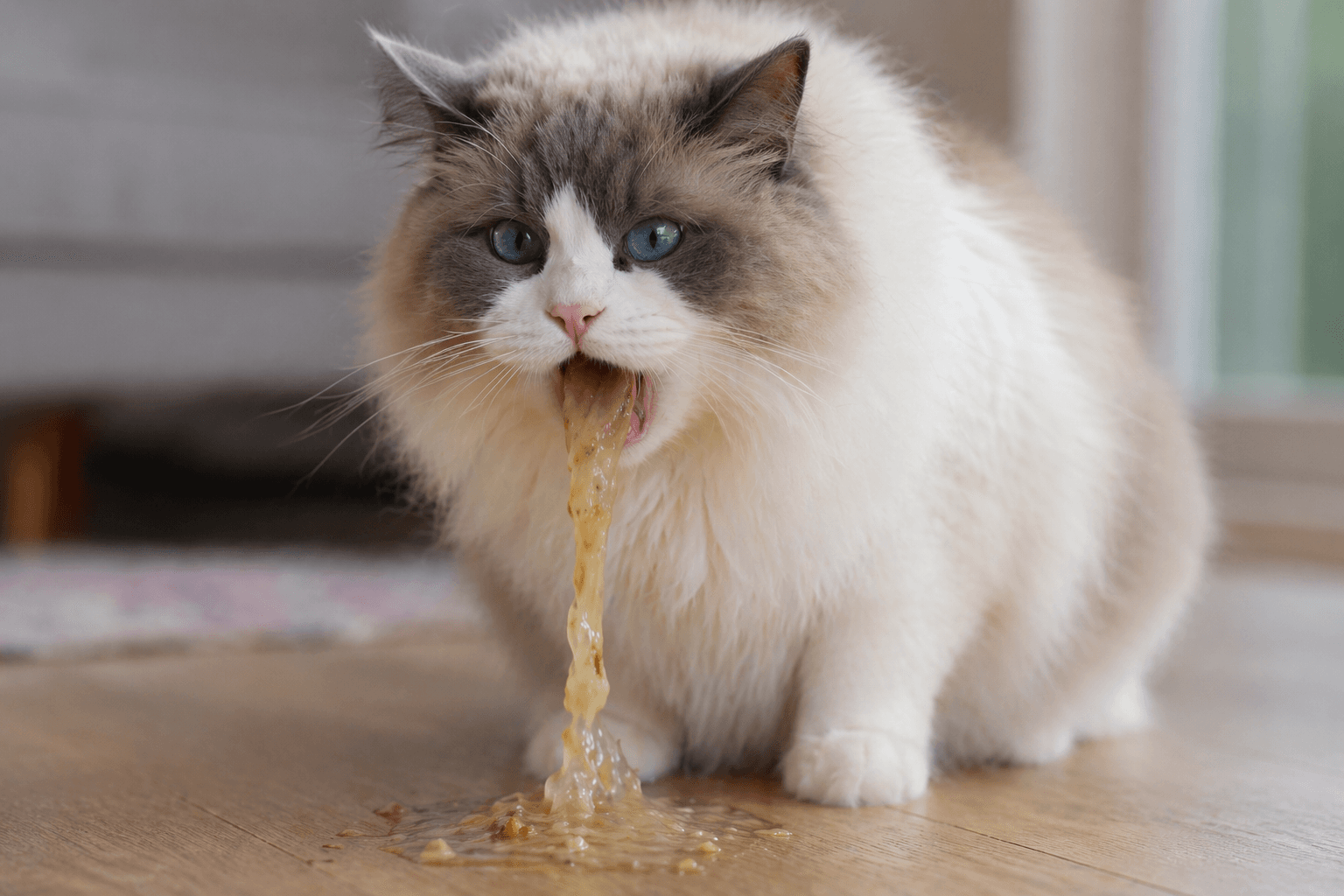
Vomiting in cats can be alarming — and messy. Whether it’s a one-time incident or a recurring problem, understanding the why behind your cat’s upset stomach can help you respond quickly and appropriately. In this post, we’ll walk you through the most common causes of cat vomiting, what different vomit types and colors may indicate, and when it’s time to call the vet.
Is It Normal for Cats to Throw Up?
Occasional vomiting — especially hairballs — can be perfectly normal, particularly in long-haired breeds like Ragdolls. However, if your cat vomits frequently, seems lethargic, loses weight, or stops eating, it’s time to investigate further. As Dr. Lori Teller, associate professor at Texas A&M College of Veterinary Medicine notes, cats who vomit now and then but remain otherwise healthy are generally not a cause for concern. It’s the pattern, frequency, and accompanying symptoms that matter most.
Common Reasons Cats Throw Up
1. Hairballs
Cats groom themselves constantly, and swallowed fur can build up in the stomach. Hairballs are typically coughed up with a gagging sound and may appear as a slimy, sausage-shaped wad of fur. Long-haired cats like Ragdolls are more prone to hairballs, making regular brushing especially important.
2. Eating Too Fast
Some cats scarf their food, which leads to regurgitation — undigested food that usually comes back up within 15–30 minutes of eating. A slow-feeder bowl can make a significant difference for these cats.
3. Dietary Intolerance or Food Sensitivity
Switching foods too quickly, or feeding ingredients your cat can’t tolerate, can trigger vomiting. Common culprits include dairy, certain proteins, grains, or artificial additives. When transitioning foods, always do it gradually over 7–10 days.
4. Ingesting a Foreign Object
Rubber bands, string, plastic pieces, or even certain houseplants can trigger vomiting — and may cause a dangerous intestinal blockage. If you suspect your cat swallowed something they shouldn’t have, contact your vet immediately. Do not wait to see if it passes on its own.
5. Parasites, Infections, or Underlying Illness
Vomiting can also be a symptom of a more serious underlying condition, including:
- Intestinal parasites
- Bacterial or viral infections
- Kidney or liver disease
- Hyperthyroidism
- Diabetes
- Cancer
A vet visit is essential if vomiting is accompanied by lethargy, weight loss, diarrhea, or behavior changes.
What Does the Color of Cat Vomit Mean?

The color and texture of your cat’s vomit can offer helpful clues about the cause:
| Vomit Color | Possible Cause |
|---|---|
| Brown | Hairball, digested food, or possible internal bleeding |
| Yellow or Green | Bile from an empty stomach |
| Red or Pink | Blood in vomit — potential emergency, call vet immediately |
| Black or Tarry | Internal bleeding or toxin ingestion — emergency |
| Orange or Light Brown | Undigested food, often from eating too fast |
| White Foam | Empty stomach, stress, or acid reflux |
According to the UC Davis School of Veterinary Medicine, blood in vomit or stool should always be treated as a medical emergency.
Vomiting vs. Regurgitation vs. Coughing: What’s the Difference?
Cats sometimes cough, regurgitate, or have hairball episodes that look like vomiting — but aren’t. Understanding the difference helps you give your vet a more accurate picture:
| Behavior | Key Signs | Common Causes |
|---|---|---|
| Vomiting | Active heaving, retching; can happen anytime | Hairballs, food intolerance, illness |
| Regurgitation | Passive, no retching; usually right after eating | Eating too fast, esophageal issues |
| Coughing | Hacking sound, expels air not food | Asthma, respiratory infections, irritants |
When to Call the Vet
Contact your veterinarian if your cat:
- Vomits more than 1–2 times per week
- Has blood in their vomit (any amount)
- Shows signs of pain, distress, or bloating
- Isn’t eating or drinking
- Seems lethargic or unusually weak
- Has concurrent diarrhea or constipation
Helpful tip: If you’re unsure what you’re observing, record a short video to show your vet. Seeing the behavior in action can be invaluable for diagnosis.
At-Home Tips to Reduce Vomiting
- Switch foods gradually — always transition over 7–10 days
- Use a slow-feeder bowl to prevent scarfing
- Brush your cat regularly to reduce hairball formation (especially important for Ragdolls)
- Remove hazards — keep toxic plants, string, rubber bands, and small objects out of reach
- Add hairball control fiber supplements or treats to your cat’s routine if hairballs are frequent
A Note for Ragdoll Owners
Ragdolls’ semi-long, silky coats mean they’re more likely to ingest fur during grooming than short-haired breeds. Establishing a regular grooming routine — even just a few minutes of brushing a few times a week — can significantly reduce hairball-related vomiting. We recommend starting this habit early when your kitten first comes home.
If you’re a Kitten Around Ragdolls family and you’re unsure whether what you’re seeing is normal for your kitten, don’t hesitate to reach out. We’re always happy to offer guidance or help connect you with a trusted veterinarian.
Questions about caring for your Ragdoll? Contact us anytime, or browse our blog for more cat care tips.
Recent Blogs

04/29/2026
How to Find a Reputable Ragdoll Breeder (2026 Buyer’s Guide)

04/29/2026
Ragdoll Kitten Care Guide: First Week Home Checklist

04/25/2026
Adopting a Retired Ragdoll: A Different Kind of Love Story
04/25/2026
How to Read a Ragdoll Pedigree: Traditional vs. Non-Traditional Cats Explained
04/24/2026